ABOUT LAB DIAMONDS
The same diamond.
A different origin
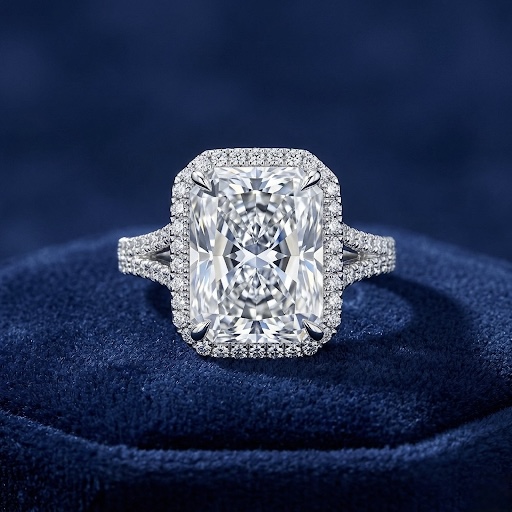
A lab-grown diamond is a real diamond. Not a simulant, not an imitation, a diamond, chemically and physically identical to one pulled from the earth. The same carbon atoms, the same crystal structure, the same hardness, the same brilliance. The only difference is where the story begins.
Natural diamonds form deep within the earth’s mantle under enormous pressure over billions of years, then travel to the surface through volcanic activity. Lab-grown diamonds replicate that exact process, under controlled conditions, in a matter of weeks. Scientists essentially fast-forward what nature takes an eternity to do, with results that are indistinguishable from the real thing, because they are the real thing.
How are they Made?
How are they Made?
Lab diamonds are grown using one of two advanced scientific processes. Both begin with a diamond seed and end with a gemstone that is structurally and chemically identical to one formed deep within the earth.
At Velvet Diamonds, we source carefully graded stones produced through both methods, each assessed by independent gemological institutions and held to the same four standards: Cut, Clarity, Colour, and Carat weight.
Lab diamonds are grown using one of two advanced scientific processes. Both begin with a diamond seed and end with a gemstone that is structurally and chemically identical to one formed deep within the earth.
At Velvet Diamonds, we source carefully graded stones produced through both methods, each assessed by independent gemological institutions and held to the same four standards: Cut, Clarity, Colour, and Carat weight.
METHOD 1
HPHT
METHOD 2
CVD
─ UNDERSTANDING THE DIFFERENCE
Lab Diamonds vs. Simulants
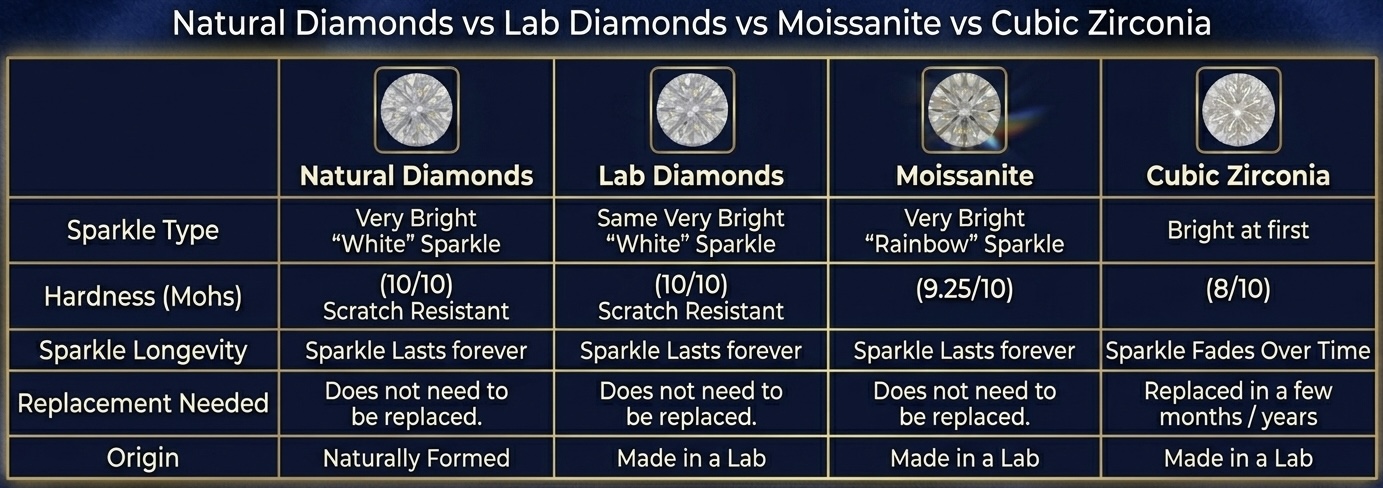
Lab-grown diamonds are frequently and incorrectly grouped with simulants like cubic zirconia and moissanite. These are entirely different materials. Moissanite and CZ are beautiful in their own right, but they are not diamonds. A lab-grown diamond is exactly a diamonds, just not mined from the earth. The table below shows a quick comparison of natural and lab diamonds with other simulants.
─ DOCUMENTATION AND GRADING
Every stone is Certified
Just as with natural diamonds, quality lab-grown diamonds are certified by independent gemological laboratories. A certificate confirms your stone’s exact specifications and provides permanent documentation of what you own.
When you purchase a lab diamond from Velvet Diamonds, your stone comes with full certification — so you know exactly what you’re wearing.
GIA
GEMOLOGICAL INSTITUTE OF AMERICA
IGI
INTERNATIONAL GEMOLOGICAL INSTITUTE
─ THE FOUR Cs
Every certified diamond — lab or natural — is graded on the same four criteria.
CARAT
COLOUR

CUT
CLARITY
CARAT
COLOUR
CLARITY
CUT
GIA GEMOLOGICAL INSTITUTE OF AMERICA
IGI INTERNATIONAL GEMOLOGICAL INSTITUTE
─ THE CASE FOR LAB DIAMONDS
Why choose Lab-Grown?
Exceptional Value
Lab-grown diamonds cost significantly less than mined diamonds of equivalent size and quality — without any compromise on the stone itself. This means you can choose a larger carat, a higher clarity grade, or a more intricate setting without stretching your budget. The diamond is identical. The savings are real.
Environmentally Conscious
Diamond mining carries a significant environmental footprint — land disruption, water use, and carbon emissions at scale. Lab-grown diamonds require considerably fewer natural resources to produce. For buyers who care about their impact, this is a meaningful distinction.
Ethically Sourced by Design
Mined diamonds carry a complex and often opaque supply chain. Lab-grown diamonds sidestep those concerns entirely. Your stone was created in a controlled environment — with no mining, no land disruption, and no question marks over its origins. The provenance is clear from the very first moment.
Visually Identical
Even trained gemologists cannot distinguish a lab-grown diamond from a mined one without specialised equipment. To the eye, on the hand, under the light — they are the same. The brilliance is the same. The fire is the same. The moment is the same.
─ AN HONEST ANSWER
Will it hold its Value
Diamonds, lab or natural, are not investment assets in the traditional sense. Like most luxury goods, they are purchased for the joy and meaning they carry, not for resale returns. The jewellery market does not function like the stock market.
What we can tell you is this: a lab diamond holds its beauty, its hardness, and its brilliance indefinitely. It will not degrade, dull, or change. And as a symbol of love, of commitment, of a moment worth marking. Its value is not something any market can measure.
“As a symbol of love, of commitment, of a moment worth marking. Its value is not something any market can measure.”
“As a symbol of love, of commitment, of a moment worth marking. Its value is not something any market can measure.”
─ A NOTE FROM US
We believe in giving you a Genuine Choice
We believe in giving you a Genuine Choice
We carry both natural and lab-grown diamonds because we don’t believe in curated narratives. Some clients feel deeply connected to the rarity and ancient origins of a mined stone. Others love the idea of a larger, brilliant diamond at a price that makes sense for where they are in life. Neither is wrong.
What matters to us is that you understand exactly what you’re choosing and that whatever you choose, it’s made beautifully.